Change – the Kotter 8 step model of successful change
Change…
Is a process, not an event
Is made by individuals, then organisations
Is a highly personal experience for those involved.
John Paul Kotter is a Professor of Leadership Emeritus at the Harvard Business School, an author, and the founder of Kotter International, a management consulting firm based in Seattle and Boston. He is a thought leader in business, leadership, and change.
Kotter created an 8 Step process model of successful change.
I've used this change model many times and it is both straightforward and effective.
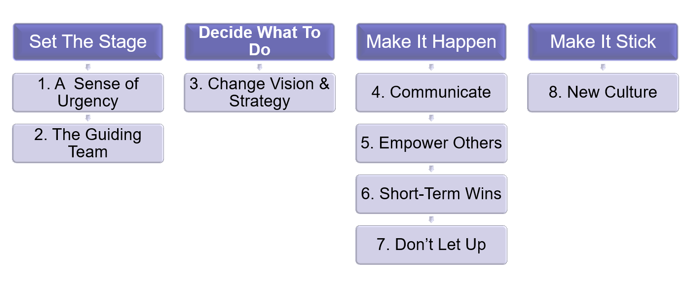
Kotter’s 8 step model of successful change
Step 1 - Create a Sense of URGENCY
People often talk about the “burning platform” for change. Change needs to happen because of an urgent issue or problem, and this can be a great motivator. You want to create a feeling of urgency, so people say - ‘This is important, let’s get on with it’!
You can help others see the need for change with data or graphs so that they recognise the importance of acting immediately. However, what often works better is an emotional appeal.
In my case, when we first started to implement the Productive Ward, I was in a situation where I didn’t have enough nurses, I didn’t have enough doctors, I didn’t have enough beds, and I had far too many patients. So the choice was either to continue with the chaos we had or to try something different and the Productives seemed to me to be the something different that we could use to improve our situation.
Even worse, our first ward had just been the subject of a Health & Disability Commission enquiry into care of 5 elderly patients. The Commissioner identified delays in care and deficiencies in communication. He said that the standard of nursing care was not reasonable and that “The nurses did not have time to care.”
I knew we had to act!
Step 2 - Pull Together the Guiding Team
Make sure there is a powerful group guiding the change. You need a team with leadership skills, credibility, communications ability, authority, analytical skills and people skills. All these things are important for success.
My approach was to set up what we called a Steering Group which consisted of the Project Sponsor (the senior manager responsible for the project), the Project Manager (me as the one leading the project), the CNMs on whose wards we were implementing the changes and a moveable feast of representatives from Allied Health and other services such as the Kitchen and the Cleaners who were impacted by our changes.
Step 3 - Develop the Change Vision and Strategy
You need to be clear about what are you trying to achieve. Set a vision and some concrete goals that clearly communicate what needs to be improved. And clarify how the future will be different from the past and how you will make the future a reality.
People respond well to images rather than words so a vision expressed in a picture and graphics is most likely to engage the team.
Given that the vision is to inspire the team, its important that it is created by the team.
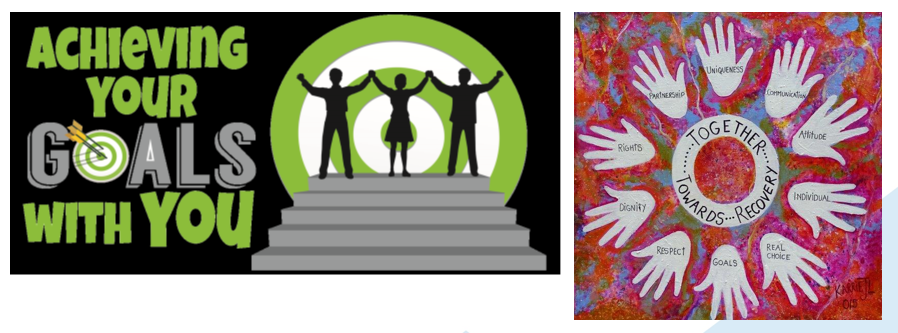
Two visions from Mental Health teams
Step 4 - Communicate for Understanding and Buy In
Make sure as many people as possible understand and accept the vision and the strategy. Keep communication simple and heartfelt- not complex and technical. Speak to anxieties, fear, confusion, anger.
When I was first implementing the Productives, I went to visit as many parts of the hospital as possible - docs, nurses, allied health, the Board, Facilities, the unions - everyone got a visit from me and my trusty presentation! You can never communicate too much!

Communicate to as many as possible
PS the photo references a great book on Kotter's model. It's called "My iceberg is melting" by John Kotter and Holger Rathegeber. It’s about a group of penguins facing change.
Step 5 - Empower Others to Act
Remove as many barriers as possible so that those who want to make the vision a reality can do so. Find and talk to people with change experience - use their experience to help.
I can’t emphasise enough how important it is for the team on the floor to do the work – they need to identify what they want to change, find out how they are doing now and work out what they will change to improve their processes.
When you start out, typically the Charge Nurse or Team Manager will be worried about the amount of work that it looks like she or he will have to do. The secret is to delegate to every member of the team. Everyone can manage just one task – spreading the load makes it achievable.
And whatever you do, don’t do it to the team – they have to come up with the changes themselves. They are much more committed to things that they have designed than things that have been imposed.
Step Six - Produce Short-term Wins
Create some visible, unambiguous successes as soon as possible, share them and celebrate them. Short-term wins help to energise and build momentum and defuse cynics.
Once people see that they can make changes and those changes help them to have a better day, they become really enthusiastic so have them tackle some small problems first and when everyone sees how that helps, even the cynics will get on board.
For example, the first complaint from the nursing team on our first ward was that they needed more vital signs monitors. But once they had worked out a system of where monitors should be placed and how they should be used, they realised that they didn’t need more – they just needed to be more organised. And they made that discovery themselves with their own changes!
Step 7 - Don’t let up
Press harder and faster after the first successes. Be relentless with supporting change after change until the vision is a reality.
Re-consider the Guiding Team - some people are great for getting things started but not so great at sustaining the change.
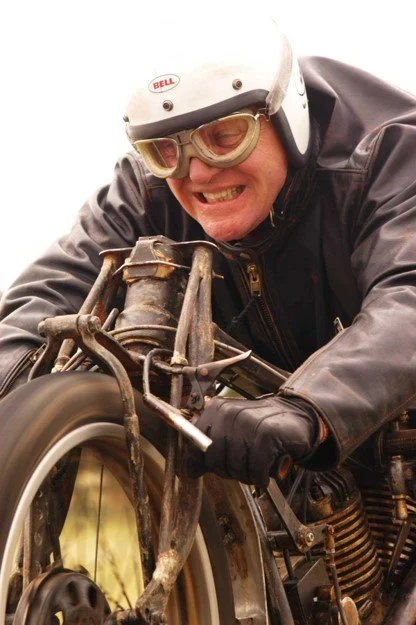
Burt Munro was a very persistent character!
The photo references the story of Burt Munro as told in the film The World's Fastest Indian. Burt was a tenacious character who set numerous land speed records for motorcycles with engines less than 1,000 cc at the Bonneville Salt Flats in Utah in the late 1950s and into the 1960s.
Step 8 - Create a New Culture
The final step is to hold on to the new ways of working. Make sure they succeed and become strong enough to replace old traditions. What Works? not stopping at Step 7- it isn’t over until the changes have roots.
What makes changes take root? Audit!
It’s not glamorous but it’s really simple and this is where oversight from the Project Sponsor is important. If that person is asking for and expecting the reporting on outcomes then the audits will continue and if the audits continue, the change will be sustained.
One Australian hospital coined the phrase “Accreditation ready every day!” Because they were measuring the things they needed to report on for accreditation and they had got to a point where they were able to say, “Come any day – we’re ready!”
Final points to note -
Change takes time and persistence.
Individuals go through stages in the change process .
Individuals have different needs at different stages.
Successful change efforts require planning, organisation, resources and action.
And importantly, change is more likely to occur when a team is given responsibility for managing implementation.
Interested in change management? Get in touch - let’s talk!