An introduction to the VAK Learning Styles tool
People commonly have a main preferred learning style. Some people have a very strong preference; others have a more even mixture of two or, less commonly, three styles. When you know your preferred learning style(s) you will understand the type of learning that best suits you. This enables you to choose the types of learning that work best for you and it enables you to communicate more effectively with your team.
There is no right or wrong learning style.
The original VAK concepts were first developed by psychologists and teaching specialists in the 1920s. VAK is now a favourite of the accelerated learning community because its principles and benefits extend to all types of learning and development, far beyond its early applications. The models provide an additional perspective on the way we each think and relate to the world, and where our natural strengths lie. The VAK model provides a different perspective for understanding and explaining a person's preferred or dominant thinking and learning style, and strengths. The more perspectives you have, the better you see and understand your own personality and learning styles, and the learning styles of employees, colleagues and staff.
VAK learning styles is why presentations and seminars usually contain a mix of visual, auditory and kinesthetic content – to ensure that all participants are able to most effectively participate.
VAK Learning Styles Explanation
The VAK learning styles model suggests that most people can be divided into one of three preferred styles of learning. These three styles are as follows, (and there is no right or wrong learning style).
Around 65% of people have a Visual learning style. They have a preference for seen or observed things, including pictures, diagrams, demonstrations, displays, handouts, films, flipcharts etc. These people will use phrases such as ‘show me’, ‘let’s have a look at that’ and will be best able to perform a new task after reading the instructions or watching someone else do it first. These are the people who will work from lists and written directions and instructions.
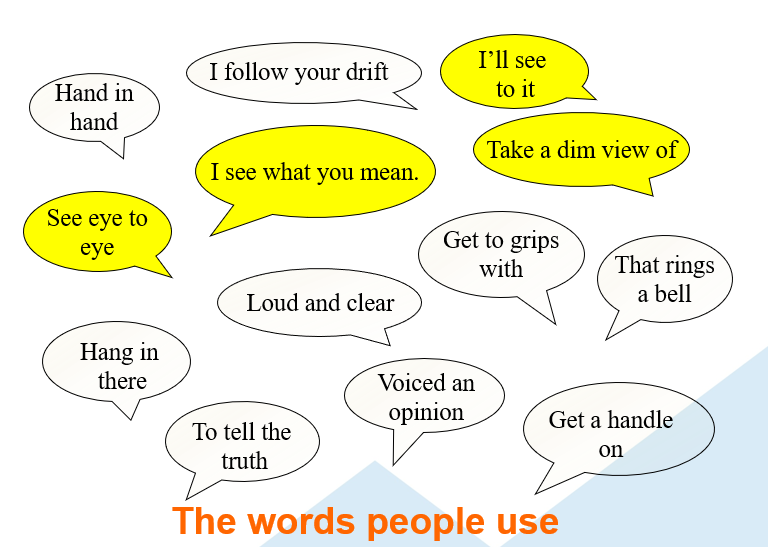
Someone with a Visual Learning Style talks like this.
Around 35% of people have an Auditory learning style. They have a preference for the transfer of information through listening: to the spoken word, of self or others, of sounds and noises. These people will use phrases such as ‘tell me’, ‘let’s talk it over’ and will be best able to perform a new task after listening to instructions from an expert. These are the people who are happy being given spoken instructions over the telephone and can remember all the words to songs that they hear!
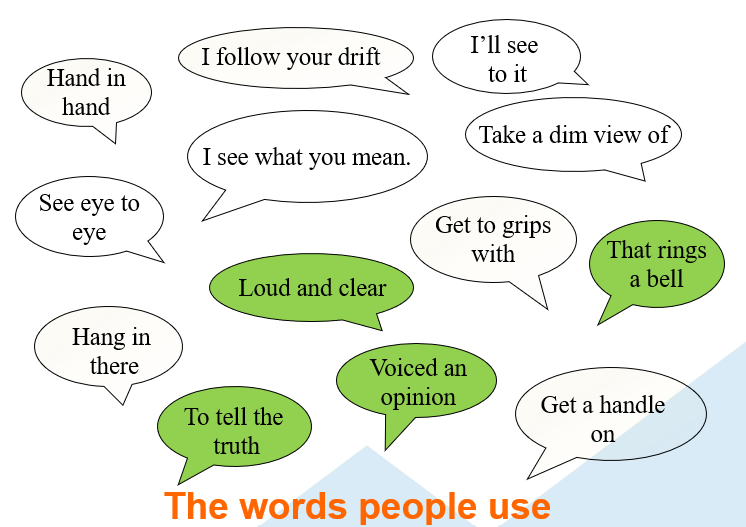
On the other hand, someone with an Auditory style uses these words.
Around 5% of people have a Kinesthetic learning style. They have a preference for learning by physical experience - touching, feeling, holding, doing, practical hands-on experiences. These people will use phrases such as ‘let me try’, ‘how do you feel?’ and will be best able to perform a new task by going ahead and trying it out, learning as they go. These are the people who like to experiment, hands-on, and never look at the instructions first!
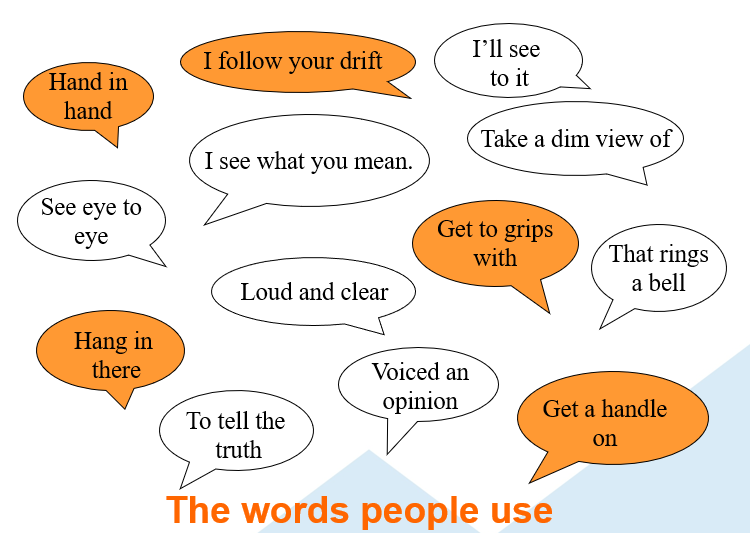
Only around 5% of people are Kinesthetic and these are the words they use.
If you match your language to the preferred style of the person you’re talking to, then you communicate more effectively.
So, how do you find out your and their preferred style?
I have Inserted the VAK learning styles questionnaire below – you can complete it and perhaps share it with your team.
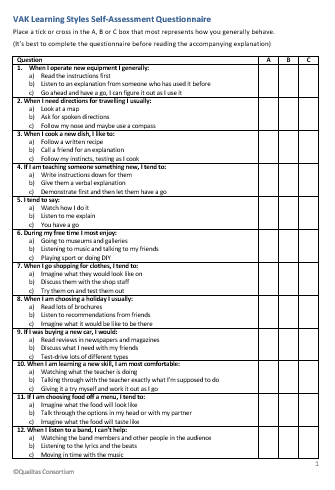
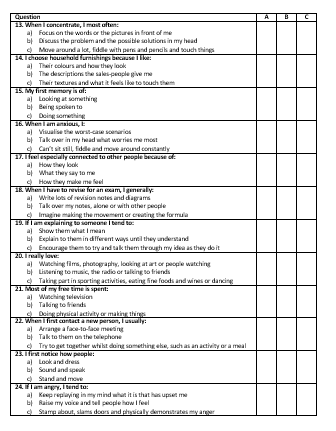
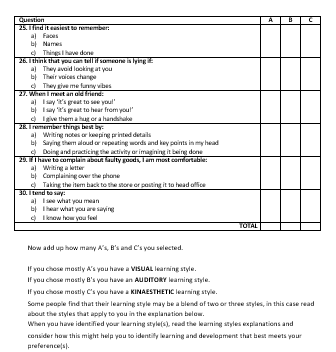
Now reflect on and discuss your VAK learning style questionnaire results with your colleagues.
Questions for reflection:
Think about what you’ve learned about your preferred learning style
Think about the different styles of your team
How can you change your style to enhance communication and learning?
Interested? Want to learn more?
Get in touch with me and follow me on social media.
Please note that this is not a scientifically validated testing instrument – it is a free assessment tool designed to give a broad indication of preferred learning style(s).
With acknowledgements to Victoria Chislett for developing this assessment. performance_psychologist@yahoo.com