Self Care
I have talked about some of this in previous blogs but today I want to pull it all together. There are six Self Care practices that I think are worth promoting. They are:
Diet
Exercise
Positive thinking
Breathing
Sleep
Mindfulness

First let’s think about your diet
Do you often grab takeaways because you’ve been too busy to prepare?
Do you eat lots of processed foods? Like cereals or processed meat?
Do you reach for a glass of wine or three every night because it’s been a tough day?
Does your diet include lots of simple carbs – bread, potatoes, rice, pasta?
Eating the right foods can help you function better.
The latest evidence is that a good diet should be based on the “Mediterranean” diet:
Mostly plant based i.e. vegetables and fruit
Red meat & chicken – 1x each week
Oily fish – 2x times each week
Eggs
Beans and red/brown rice (which help the body produce serotonin, an important neurotransmitter, which enhances memory and thinking skills)
Nuts and seeds
Avocado, olive oil and full fat dairy
Prebiotic and probiotic foods, such Kombucha, Kefir, sauerkraut, seaweed, yoghurt etc.
Drink water …
Dehydration often causes tiredness. For each 1% loss of water, the body loses 10% of muscular strength. Lack of water also causes an increase in uric acid – leading to kidney stones and dry skin – which also ages us more quickly, giving us more wrinkles!
Think about your eating habits…
Are you eating a healthy diet?
Are you drinking enough water?
What do you need to change?
Get Exercise
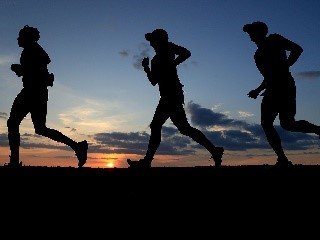
Your body is designed to release stress chemistry through physical activity (fight or flight). This may not be possible on a busy day but if you are aware of stress, take a walk around the block or, if you have access to a gym, take time out during a break to get some physical exercise.
Think about your exercise patterns?
Do you exercise regularly?
Or are you always too busy to fit exercise into your day?
There is increasing evidence of the importance of exercise
Latest research says we should exercise 4 -6 times each week
Research studies show that …
Exercise significantly improves cardiovascular fitness. It also improves blood vessel function and markers of blood vessel health; it lowers insulin resistance and leads to increased weight loss. And it’s beneficial to cognitive control and working memory capacity.
Taking a break every hour to stretch or walk, even just for five minutes, can help to refresh your thinking.
Have you heard of HIIT? High Intensity Interval training
3x 20 second bursts of intense cycling 3x times each week is all that’s needed!
Warm up with 2 minutes cycling
Do 20 seconds as fast as you can at as high a level of resistance as you can
Do another 2 minutes of cycling
Do a second burst of 20 seconds – as fast as you can at as high a level of resistance as you can
Another 2 minutes of gentle cycling
A final burst of 20 seconds – as fast as you can at as high a level of resistance as you can
Cool down with 2 minutes of gentle cycling
Think about your exercise habits…
What sort of exercise do you do?
Are you doing enough exercise?
What do you need to change?

Positive Thinking
You can think yourself into stress, e.g. ‘I’ll never get this done’ or ‘There’s too much to do in too little time.’ This simply reduces your ability to think clearly, reduces your immune system and is ineffective. Switch your thinking to, ‘I can break this task down and do it step-by-step,’ or ‘I can keep calm and do my best and I will do a better job,’ or ‘I’d prefer it if I had the ideal time and resources, but I can manage it anyway.’
Positive thinking is good for you
“Positive thinking about future events correlates highly with measures of wellbeing. However, the ability to think positively is, in turn, closely associated with household income, how many friends you have and how effectively you plan to achieve your goals.” Royal Holloway College, University of London – What’s New? News Release – 13 December 2001
‘Our findings showed that the extent of a person's social networks, the effectiveness of their plans to reach their goals and their household incomeall make independent contributions to explaining the variations in their ability to think ahead to positive future experiences,’ Dr Andrew MacLeod, department of psychology, Royal Holloway College.
Thinking positively…
Are you a negative or a positive thinker?
How’s your positive self-talk?
What do you need to change?

Breathe!
The way you breathe has a powerful impact on your energy via your nervous system. Diaphragmatic (or deep) breathing reduces stress and anxiety. Breathing slowly and mindfully activates the hypothalamus, connected to the pituitary gland in the brain, to send out neuro hormones that inhibit stress-producing hormones and trigger a relaxation response in the body. As a singer, I was taught to breathe diaphragmatically and I find it easy but if you’re not familiar with it, it can take a bit of practice.
How do you do it?
Find somewhere quiet to sit (floor, chair or lie down). Place your hands on your stomach and look straight ahead or close your eyes. Take a long, slow inhale, breathing through your nose. As you inhale, send the breath to your stomach and let it extend your belly with the inhale, so that you feel your hands gently push forward with your belly. You don’t need to hold your breath here, just pause. Exhale slowly through your mouth as your belly shrinks back toward your spine. Pause then repeat for 10 breaths.
It may feel uncomfortable initially as some of the muscles are not used to being used but the more you practice this, the easier it gets, until you’ll find yourself doing it automatically. You will notice an increase in your energy levels, feel less tired, more relaxed, and able to cope with stressful situations and times so much more easily.
Here’s a useful breathing exercise - 7/11 breathing
You can release the chemistry of stress through breathing and relaxing your body. The 7/11 breathing exercise has been proven to reduce blood pressure.
Take in a breath now and count in for seven.
Release the breath more slowly, for 11 counts.
Repeat three times.
Think about your breathing…
Do you consciously breathe diaphragmatically?
Do you breathe deeply from time to time?
What do you need to change?

Sleep
We do it every night. We spend approximately a third of our time doing it. But what is it? Doctors and scientists are really just beginning to understand all the important ways that sleep affects our health and well-being — and all of the reasons we do it.
“Sleep is a natural, restorative, physiological process characterized by a perceptual disengagement [meaning you tune out from whatever’s going on around you] and must be rapidly reversible.” Rafael Pelayo, MD, clinical professor of psychiatry and behavioral sciences and a sleep specialist at the Stanford Sleep Medicine Center, California,
The bottom line is that we need sleep to function. Dr. Pelayo says - It’s a critical process that allows the body to function and stay healthy — and it’s especially important for the brain.
“The entire body takes advantage of sleep. But sleep is really how the brain gets reset for the next day. Sleep restores the brain.”
That means not getting enough sleep or good quality sleep will damage many systems of the body and over time contribute to risk of chronic disease and health problems, but the most immediate consequences of not sleeping that you’ll notice are those that affect your mind and thinking.
Get enough sleep
Stick to a sleep schedule of the same bedtime and wake up time, even on the weekends.
Exercise is helpful for good quality sleep.
Evaluate your room.
Your bedroom should be cool – between 16-18 degrees
Your bedroom should be free from any noise
Your bedroom should be free from any light.
Sleep on a comfortable mattress and pillows.
Use light to help manage your circadian rhythms - avoid bright light in the evening and expose yourself to sunlight in the morning.
Avoid alcohol, cigarettes, and heavy meals in the evening.
Wind down.
Practice a relaxing bedtime ritual.
Your body needs time to shift into sleep mode, so spend the last hour before bed doing a calming activity such as reading.
Avoid electronics before bed or in the middle of the night.
One final point…
How quickly do you fall asleep? If you’re out as soon as your head hits the pillow – you are probably sleep deprived. It should take you around 15-20 minutes to fall asleep!
Think about your sleeping patterns…
Do you get enough sleep?
Do you get good quality sleep?
What do you need to change?

Mindfulness
“Mindfulness" is defined as a non-judgmental, moment-by-moment awareness of our thoughts, feelings, bodily sensations, and surrounding environment. When we practice mindfulness, our thoughts tune into what we’re sensing in the present moment rather than rehashing the past or imagining the future
Meditation
Meditation is closely related to mindfulness, but not synonymous. You can practice mindfulness without doing formal meditation. “Meditation" refers to a wide range of practices that simply involve training the mind to achieve a particular state of consciousness, especially for relaxation. That said, mindfulness meditation is a basic and commonly practiced form of meditation.
Mindfulness-Based Stress Reduction (MBSR)
MBSR has its roots in Buddhist meditation. It’s a secular practice of mindfulness developed by Jon Kabat-Zinn from the University of Massachusetts Medical School. Over the past 35 years, thousands of studies have documented the physical and mental health benefits of mindfulness in general and MBSR in particular. This has inspired countless programs to adapt the MBSR model for schools, prisons, hospitals, and beyond. It includes practices such as the "body scan," in which you focus your attention along each part of the body, trying to be aware and accepting of whatever you sense in these body parts and also the famous "raisin meditation," where you slowly use all of your senses, one after another, to observe a raisin in great detail, from the way it feels in your hand to the way its taste bursts on the tongue
Think about Mindfulness…
Do you do any Mindfulness practice?
Do you think you should? Could?
What do you need to change?
In summary…care for yourself
Eat well
Make good food choices
Follow the Mediterranean diet
Get some exercise
Your body is designed to release stress chemistry through physical activity.
If you are aware of stress, take a walk around the block or take time out during a break to get some physical exercise.
Practice Positive Thinking
You can think yourself into stress, e.g. ‘I’ll never get this done’ or ‘there’s too much to do in too little time.’ This is ineffective!
You can switch your thinking to, ‘I can break this task down and do it step-by-step,’ or ‘I can keep calm and do my best and I will do a better job,’ or ‘I’d prefer it if I had the ideal time and resources but I can manage it anyway.’
Breathe
You can release the chemistry of stress through breathing and relaxing your body.
Remember the 7/11 breathing exercise? It has been proven to reduce blood pressure
Take in a breath now and count in for seven. Release the breath more slowly, for 11 counts. Repeat three times.
Sleep
Get enough sleep
Get good quality sleep
Practice mindfulness or mindfulness meditation
Start with a short session every morning – in whatever form suits you best
Work up to 20 minutes per day
And …When you feel tense, relax!
Notice where your body is holding stress, often in the neck and shoulders. Gradually take your attention down through your body and relax each part in turn. This can refresh and re-energise you in the middle of a busy day.
And to wrap it up, think about all these self-care practices…
Which ones do you currently do?
Which ones do you think would be helpful?
Which ones are you going to try?
Decide three changes to help you manage stress more effectively and look after yourself and your team.
Commit to doing these three things next week.
Write your decisions down.
What are your decisions?
I run a training webinar on this topic - want to know more? Get in touch!